Season 4 · Episode 3
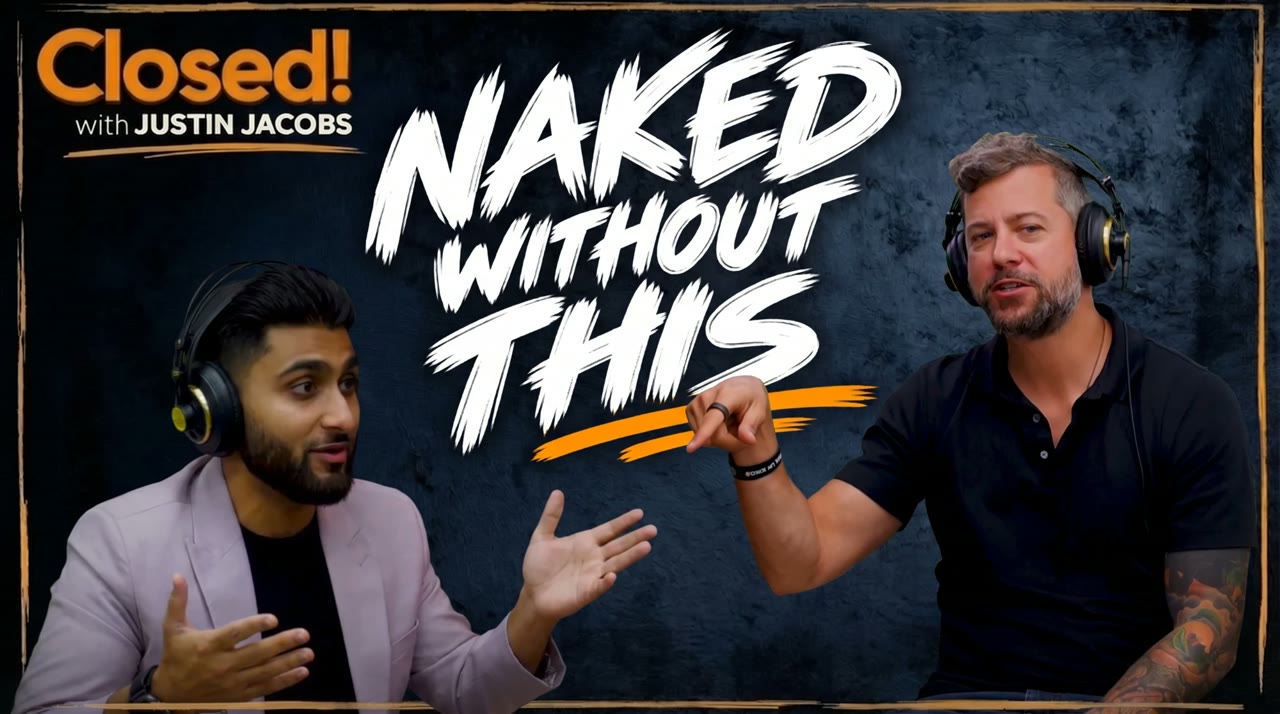
Nakedwithout this
Umer Khan on writingthe other half of the policy.
Part 1 of 5 · Watch or listen
The episode
Most agents write one plan, hand over a folder, and call it a day. They wrote half the policy.
 Watch on YouTube ▶
Umer KhanPrincipal, Affordable Health and Life22, and a second-generation agent
Umer Khan is 22, the principal of his own agency, and a second-generation agent. His mom has worked Medicare for years, his dad ACA, and his sister just joined. Instead of competing with them, he took the lane they weren’t working: ancillary, the other half of the policy most agents never write.
This episode is a clinic on cross-selling without pushing. Bring it up at the start of the call. Say the co-pay or the deductible out loud, then offer the fix. And send the quote, even on a no.
What it’s done for him, in his words: ancillary is his bread and butter, it doubled and tripled his income, and 98 to 99 percent of his clients stay, because a client with four or five products has nowhere better to go.
“The Medicare Advantage plan is naked without the supplement. It’s the cherry on top. … So who wants a milkshake without the cherry on top?”
Part 2 of 5 · Jump in anywhere
Chapters
Times from the final edit. The chapters on YouTube match them.
- 0:00The cold open
- 1:53Born into it
- 4:39Why he chose the ancillary lane
- 6:40The plan is naked without it
- 11:12Sell it up front, never at the end
- 14:40The ACA add-ons
- 22:19The income case
Part 3 of 5 · The lesson
Six moves to steal
The whole episode, in the order you'd use it on a call.
- 1
The job isn't finished at the sale.
The main plan is half the policy. The other half is the coverage the client actually needs.
- 2
Plant the seed at the start of the call.
Bring the add-on up inside the main presentation, not as an afterthought once they're ready to hang up.
- 3
Say the number, then the fix.
Name the co-pay out loud (his example: $400 a night in the hospital on one PPO plan), then offer what helps cover it.
- 4
Match the max out-of-pocket.
On an ACA plan with a $10,000 max out-of-pocket, his example is accident and critical illness for about $15 to $20 more. Plus the dental and vision a medical plan doesn't cover.
- 5
Never push. Always offer. Send the quote.
Even on a no, email the quote, so they can come back to it when they need it.
- 6
Consistency.
His one word for how you build the habit: offer it on every call, and don't let the first no stop you.
“It’s really rare that a client would leave us, because they have four or five products with us.”
The 60 percent figure in the episode (clients who take ancillary when it’s offered) is from one carrier presentation Umer cited, not HPM data.
Part 4 of 5 · Use it on your next call
The toolkit
Two sheets to print, the follow-up cadence, and a one-minute strategy video.
- On the callPlant the seed at the start. Name the number. Offer the fix.
- After a noEmail the quote. Explain the dental waiting period, so they know they can’t wait until the root canal to buy it.
- Every clientKeep offering. Four or five products is what makes a client stay.
Part 5 of 5 · Every word
The transcript
A machine transcript of the episode, lightly corrected.
Read the full conversation
It's really rare that a client would leave us because they have four or five products with us. So when they have four or five products with us and they go to a different agent that's only offering one of the four products that they have with us- Mm ... they realize that that agent is not capable- Mm ... of adhering to their needs.
Most agents write one plan, hand over a folder, and call it a day. They wrote half the policy. Umer Khan built an entire agency by writing the other half: the dental, the vision, the cancer plan, the coverage clients actually need, and he did it young. Let's talk about it. All right, I'm here with my buddy Umer Khan, the principal of Affordable Health and Life.
Did I get that right? You got that right. All right. That's right. How old are you, first of all? 22. 22 years old. Yes. Dressing like just immaculate every time. I'm loving the blazer today. Learned it from the best. Yeah, right. Yeah, right. His name is Justin Jacobs. Yeah, right. Yeah, right. 22, in this business killing it.
Uh, you already have an agency. You work with your, your... You got a family business with your mom, your dad, and now your sister. I think you dragged her in there. She didn't really want to, but now she's loving it. So tell me how you got started, you know, building your own agency and brand, you know, kind of, you know, following in the tracks of mom and dad.
So long story short, you know, back when I was in high school, I was pretty much going to the pre-medical route. Hmm. So I'm actually about to finish my bachelor's degree in psychology. Okay. So it's still in the medical route. Yeah. However, you know, later on in high school I realized that I think sales is more of my pitch, right?
Hmm. I feel like everybody has a niche, right? And everybody just has to find it. And so I always felt like sales is something that is important for me, and also I wanted to do something that helps people. Mm-hmm. Right? Something that doesn't feel like selling- Yeah ... but something that is like naturally people need.
Hmm. And my parents have been doing insurance for a very long time. Mm-hmm. Right? About 19 to almost 20 years in the business, right? And so I did not waste any time. The only thing that- Hmm ... was stopping me from getting my license was my age. Mm-hmm. So as soon as I turned 18, I picked up the license and it was the best decision I've ever made.
So you were born into it. Born into it. And, um, you know, Mom and Dad are into it. You're second gen insurance agent. But one thing I just picked up on, you've got, uh, the psychology background. You know, you went to- That's right ... school for it, and h- has that played into your role as far as sales are concerned?
Because that's like one of the, for me, it's like one of the cool areas that I would... You can go down a rabbit hole talking about the psychology of sales. So how does that like work in your mind? I think it helps a lot because 99% of the times you're speaking on the phone with the client, right? Hmm.
Especially after post-COVID. A lot of it is remote now, so it's kind of important to understand what the client is feeling, right? Mm-hmm. And what to say and what not to say. So it's important to kind of read the room- Mm-hmm ... even though they're not in the room. Mm-hmm. So you have to read them through the phone- Yeah
based on their tone, based on how they're feeling. You have to ask them certain questions so you know how to make your pitch correctly. Yeah, that's pretty awesome. It's kind of psychological- Yeah ... involved in that. I mean, so you can tell Mom and Dad that it paid off. Definitely, definitely Very cool I think anything in school definitely pays off.
Uh, even if you don't use it on your day-to-day basis- Right ... I think eventually you will use it Yeah, you can apply a lot of the things that you learn there to your day-to-day activity. You know, sales is something or a skill that, you know, you'll never not need it- Absolutely ... you know, in everything that you do.
Um, so you took a different route than, than, uh, your parents as far as the insurance is concerned, and you're really doing well in the ancillary space, which is where our partnership really came from. Why did you go that way? So I've always felt like my parents, they've already had it on lock- Mm-hmm ... in terms of what was there to offer.
For example, my father has been in the ACA space for, uh, over five years now, coming out to, like, almost 10 years at this point. Mm-hmm. And my mom has been doing Medicare for over 19 years. Yeah. And so one person's already doing the Medicare, the other one's doing the ACA. So I felt like there was something that had to be different if I was to get involved.
Mm-hmm. Right? If I was to just get involved and focus on Medicare, we've already had that going. Or if I was to get involved and just focus on ACA, again, we've already had that going. So I wanted to innovate something new that is not really focused on too much in our agency, and that's ancillary products.
Right. Because there's a whole market out there that needs ancillary products. It helps them. It's a problem that people are not aware of. Mm-hmm. And so whenever we're speaking with a client, we identify that issue, and we provide a resolution to that issue, which is ancillary products. Mm-hmm. And it's not only ancillary.
It's also medical products that replace ACA as well. Mm. So for example, people in the higher income bracket, they don't get government subsidy. Mm. They want to avoid the marketplace. So there are products that are called short-term- Mm-hmm ... or indemnity plans, and those are products that we were not doing previously, you know, on a large scale basis.
Short-term was always there. Mm. My mom used to do short-term. Mm-hmm. But not in the scale that we're doing it today. Yeah, so you saw the need even on your, your parents' book of business. Absolutely. And now they're kinda, like, reversing it and turning it back towards their clients, right? Absolutely. Yeah. Once I, once we got involved with the ancillary, we put together a game plan on how we can expand this and how we can help more people, and the best way to do it was to work on the existing book of business before focusing on new business.
Yeah. So let, let's shift into, you know, what we're seeing in the market. Like, you had mentioned a lot of agents are doing that main sale. They're doing either an ACA sale, or they're doing a Medicare sale, and they're ju- and then they're leaving. Like, w- what's, what's happening there? Why are they doing that, and then how is that impacting the client first?
So if we use the example of Medicare- As an agent, you can write the Medicare product, whether that's a Medicare supplement- Mm-hmm ... or a Medicare Advantage plan, and then you can call it a day, right? Yeah. You can hang up the phone. Sure. The job is done. But I would argue that the job is not finished until you offer the add-on- Mm
that comes with- Mm-hmm ... Medicare Advantage plans. So there's this product, it's called Advantage Guard, and what that aims to do is eliminate the co-payments, the large co-payments that are associated with Medicare Advantage plans. So for example, on a core Medicare Advantage plan or a chronic, the duals of course is an exception because pretty much- Mm-hmm
everything is zero. Mm-hmm. But on chronic and core plans, which majority of the population are on, the co-payments for hospital-related things such as inpatient, emergency room, ambulance- Mm-hmm ... they're fairly large co-payments. Yeah. Any agent that writes Medicare Advantage plans, they know this. Yeah. So when you offer an Advantage Guard, right, which is a product that we've been working on, it eliminates those large co-payments.
So on one end, you're paying that to the Medicare Advantage plan- Mm-hmm ... but on the back end, the client is also receiving a reimbursement, so they're basically paying nothing at the end of the day- Mm ... eliminating those large co-payments. Yeah. I've heard people say it's insurance for your insurance. And, and then they get kind of- It is.
It's kind of a supplement. Yeah, they kinda get turned off by that. What, what do you usually say to that? So it's all about presentation, right? Yeah. Mm-hmm. If you present it that way, that it's insurance for insurance- Mm-hmm ... then I, I think I would get turned off as well. Sure. Right? Yeah. But if you offer it in a way where it sounds like it's a nec- it's a necessity- Mm-hmm
then the client would get turned on by that. Yeah, and you see it too, like, in their eyes, like, once you show them the hospital co-pay and it's, like, 500 bucks, and they're like, "Whoa, whoa, whoa, whoa." Absolutely. Then they start asking questions about it, then you're like, "Wait, I have a solution for you." It... Well, usually they're not the ones who say, "You know, that's expensive"- Mm
because they don't know that there's an option out there- Mm-hmm ... that could eliminate that. Right. So it's your job to let them know that that is expensive- Mm-hmm ... establish that, you know, issue- Mm-hmm ... because that is an issue- Yeah ... and provide a resolution to it, right? Mm-hmm. Medicare Advantage plans are already doing that.
That's why they have two options. There's usually money back options- Right ... and there's non-money back options. So the non-money back options, the co-payments are significantly less. Mm-hmm. Right? But on one end, they have to give up the money back- Yeah ... which can tend to be about $2,000 a year. Mm-hmm. Right? So instead of having the client, you know, suffer with not having $2,000 a year in their pocket in Social Security- Right
they can take an Advantage Guard, which is significantly cheaper than a non-money back plan. Mm-hmm. Those plans are very expensive. Yeah. So- Yeah ... you know, kind of building those relationships and building the policy, building a plan out for the client- Mm-hmm ... is the important thing to do. When you build a plan for the client- Mm
saying, "Take this plan, put the Advantage Guard with it, and this tends to be the best option" Right ... then the client is more likely to take it because they'll feel like the Medicare Advantage Plan is naked without- Mm. .. the supplement. Right. It's the cherry on top. Yeah. Right? When... Have you ever been... Have you ever had a milkshake?
Of course. Of course you have, right? Yeah. Everybody's had a milkshake- Yeah ... I hope, right? So who wants a milkshake without the cherry on top? Yeah. Right? It's missing something at that point. It's, it's missing something. Yeah. If, if my milkshake came without a cherry and your milkshake came with a cherry, I'd feel- Yeah
a little bit jealous. You'd probably steal it. I'd probably take the cherry and put it on mine. Steal my cherry. Okay. So, um, what, what we've seen recently, and this is, this is new for this year, uh, we've seen CMS come out and say, "Look, we're focused on retention," right? So that's a big thing. So we put two and two together and say, how do we better retain our clients?
And that's gotta be through cross-selling, you know, off- offering other products to tie a deeper tie. And Deft Research actually came back and said clients that bought a second product, they're actually expecting that from their agent, first of all. Secondly, when they do buy it, they're way more likely to refer other people in.
So, um, why do you think that agents... Or, or what are they missing in this? Why, why do you think that they're just kinda maybe even scared to offer these products? What, what do you think is happening in their mind? I feel like once the main product is out of the way, whether that's a Medicare Advantage plan or whether that's the ACA plan- Mm-hmm
they feel like if they talk about anything else, whether that's dental or vision or Advantage Guard- Mm-hmm ... or accident or critical insurance, any of the supplements, right? They feel like they don't wanna sound like they're selling. Right. So instead of talking about it afterwards, you wanna implement it in your sales.
Okay. Right? Talk about it beforehand. Explain that, hey, this is a product, but the product is not really complete- Mm-hmm ... without this other part. So plant the seed during that initial conversation. Correct. Yeah. It's not a bad thing to explain it to them afterwards. Mm-hmm. But I would say it's not the best way.
Mm. The best way is to talk about it from the beginning- Mm ... so that they understand the need for it- Right ... with the core plan. What, what does that look like? How, how would you kinda bring that up during the conversation? So you want an ACA example or a Medicare example? Uh, let's start with Medicare. Okay.
So with a Medicare example, exactly what we spoke about. Mm-hmm. I would... When I'm presenting the plan- Mm-hmm ... I would talk ab- you know, you're already gonna talk about the emergency room co-payment. Right. You're already gonna talk about the inpatient, the ambulance- Mm-hmm ... everything that is offered on Advantage Guard.
Mm-hmm. So as you're speaking about it, expl- let them know that these are co-payments that are large. Mm-hmm. Right? Don't let it just be an elephant in the room. Right. Explain it to them that, "Hey, I understand on this PPO plan- Mm-hmm ... the co-payment is $400 a night in the hospital." Right. Right? Some agents, they'll just say that it's $400 a night- Move on
and then move on. Right. But I would not do that. I would basically let them know that, hey, it's $400 a night. However, we have a solution to that issue. Mm. And the solution is the Advantage Guard. Mm-hmm. So I'm implementing the ancillary within the sale- Awesome ... within the presentation of the core. So w- for an agent that may not know how to do cross-selling, never has done it before, this is new territory for them.
You know, a- and I've heard it too, like, "Oh, I don't wanna mess up this, the main sale." What do you recommend them, uh, how, or how do, how do they get started in cross-selling? The way you have to get started in cross-selling is you kind of just have to offer it. Mm-hmm. You know, make it part of your routine. I feel like every agent has a routine on what to talk about from the beginning of the call to the end of the call.
Mm-hmm. So you have to find a sweet spot within that call to talk about the ancillary product. You, of course, don't wanna push anything on a client, 'cause once you start pushing something on a client, the client will sense that, and then you are at risk of losing the main sale. Mm. So it's kind of an art of having to present it in a way where the client doesn't really feel like they're being sold.
Yeah. You know? Yeah. You're, you're adding value, and I think that's the biggest thing too. A lot of agents are after the sale, right? Like, we, we, we get it. But if you're coming at it from the value perspective, like, "This is gonna save you X, or this is gonna add X, Y, and Z to your portfolio." And I love the way that you positioned it where it's, you know, the main thing is part of the puzzle.
It's not the whole puzzle. Yeah. Absolutely. So, so walk me through an ACA example. What would that look like as far as, you know, they call you up, maybe you've got a plan for them. Maybe you're, you're kinda moving them in a different direction. What would, what would that look like? So an ACA example would be, one of the biggest issues with ACA is the large deductibles and large maximum out-of-pocket.
Mm-hmm. So we talked about on Medicare Advantage plans, it's the hospital-related co-payments. The biggest issue with ACA are those deductibles and max out-of-pockets. So how do we solve that issue? You offer a accident and a critical illness insurance that is going to eliminate that maximum out-of-pocket. So for example, if I was selling a policy with a $10,000 maximum out-of-pocket- Mm-hmm
which is very common in the ACA world right now- Mm ... we would let them know that, hey, we understand that the maximum out-of-pocket is 10 grand- Mm-hmm ... but we have a solution to this issue, and that solution is to match that 10,000 with the number one reason why you would reach the 10,000- Mm-hmm ... which is an accident.
Mm-hmm. And the second-biggest reason why you would reach the 10,000 is a critical illness, right? Such as heart attack, cancer, stroke, right? End-stage renal disease. There's a whole list in there of very common critical illnesses that occur- Mm ... that will cause you to reach the 10,000 maximum out-of-pocket. So when you offer that, and the client realizes it's only 15, $20 over their premium, they're likely to, you know, take that policy.
Right. Because without that, they know they're potentially gonna have to pay the 10 grand from their own pocket. Mm-hmm. So by adding the number one value of why you would reach that maximum out-of-pocket being an accident, and the number two value being a critical illness, why would you not take the policy?
Yeah. Would you take the policy? Of course. I mean, especially if I have a family, right? Like- Right ... like, like kids get hurt. Absolutely. You know what I mean? Life happens. Um, we j- we actually just, uh, our daughter, just playing around with our two-year-old, yanked her arm out and had to go to the e- the, the urgent care.
It, it was no big deal, but, like, at the same time, it could've been a lot worse, right? So, you know- Absolutely ... panicking about that, and I'm, like, doing the numbers in my head. I'm like, "Oh, how much is this gonna cost me?" Um, so, so, so how do you approach... You know, 'cause, 'cause you're not just selling one or two policies.
You're kinda looking at it maybe three or more. Is that fair to say? Absolutely. Okay. With every ACA policy, the client is typically looking for a dental and a vision product. Boom, yeah. But it's just not talked about. Yeah. So, and it's not being offered by the agent. Is it the client's fault that they're not asking about it, or is it the agent's fault?
Personally, I think the agent is missing a massive opportunity. Absolutely. And you're the insurance agent. Correct. You're the one who is- Exactly ... educated- Yeah ... about- Yeah ... the field, right? You should drive the conversation. Absolutely. Yeah. You're the one who knows what's out there in the market. The client doesn't know that.
Mm-hmm. Mm-hmm. Right? When you go to a car dealership, usually you don't know what type of car you're looking for. Right. You're there to shop around, and the car salesman- Yeah ... he's the one who explains the options, and you find the You know exactly what you're looking for. Mm-hmm. So when you're an agent, it's the same thing.
You have to explain to the client that this is a need, right? Because on a s- traditional ACA medical plan dental is not covered. Mm-hmm. So common problems are people are getting cavities, for example. Yeah. Root canals are common. Crowns are common. So what are you gonna do with an ACA policy that doesn't have dental and vision- Mm-hmm
and you run into these issues? Yeah. So it's the same principle, identifying the issue and then providing a resolution- Yeah ... which is dental and vision. Yeah. It's hard because there may not be an issue now, which is when people want insurance. Right. Like, "Oh, man, I gotta, I gotta get a root canal. Can I buy dental insurance?"
And you're like, "Yeah, it's kind of a little too late to really get a lot of value out of it." Um- Right ... so you have to... It's not that you're selling fear, but you also have to make them aware, like, "Hey, there's some serious cost behind these things if you don't have them covered up front." Absolutely. It's like car insurance, right?
You don't buy car insurance after you had the accident. It's not gonna work that way. That's very true. You know what I mean? No, it doesn't. Yeah. It... What I, what I also do is whether the client is gonna take the dental or not- Mm-hmm ... what I tend to do is I just give them the option and present it, and later on they usually end up calling me back.
Hmm. So after I'm done with the ACA policy, I ask them, I say, "Hey, are you also looking for dental and vision?" Mm-hmm. And even if they say, "No, I'm not looking for dental and vision," I'll, at bare minimum, I will send them a quote for dental- Hmm ... and I will explain to them, you know, what is out there in the dental market- Mm
so that they can reconsider it later. And what's very common in dental insurances is waiting periods. Yeah, yeah. Right? Almost every single company has a waiting period. Mm-hmm. And rightfully so, because- The insurance carriers have to make money. Yeah. They're not gonna give you 50% for major coverage like a root canal from day number one.
Right. It's rare. But the client doesn't know that. Mm-hmm. The client is thinking that, oh, when I need the root canal, I'll just call and get the insurance then. Yeah. It's too late. But it's your job to educate them that if you take the insurance now, it'll be 15%, and if you hold it for a year, it'll then become 50%.
Mm-hmm. When you explain that to them, then they'll... You know, even if they don't take it at that moment, they'll think about it. Like, "Wait a minute, I should probably take that now- Yeah ... and, and call this guy back." Yeah. So. So what do you say to a client when they push back and they, they're just like, "I don't think I need that right now"?
If they feel like they don't need it- Mm-hmm ... and you've done your job- Mm-hmm ... with identifying the issue, it's no problem. At bare minimum, you should send them an email with the quote- Mm ... so that they could reconsider it later. And a lot of times what happens is when they do run into the issue, even though you can't solve that issue anymore because it's a preexisting issue- Sure
they'll slowly understand the need for it for the next- Yeah ... time that happens. It's almost like I told you so without saying I told you so. Exactly. Exactly. You never wanna say- Yeah ... I told you so. Yeah, exactly. But e- exactly how you said it. Yeah. It, it really is like that. So, um, what would you do, um, as far as, um, your, y- you know, you, y- an agent that's coming from Medicare or ACA, and they're coming in, and they're, they're new to the cross-sell, how do you make this a habit?
How do you, how do you get it as part of, like, your r- your repertoire, like, the way that you do your business? How, how do you start that process? Just one word. Yeah. Consistency. Consistency. That's it. Awesome. Yeah. Consistency. As long as you're consistent about it, you're offering it to everybody- Mm-hmm
people will take it. So every deal, every time. Absolutely. Yeah. There's always room for ancillary products- Mm-hmm ... and there's always room for education for the client. So as long as on every single call you are identifying these issues- Mm-hmm ... you're presenting it to the client- You're gonna get, you're gonna get hits, right?
There was actually a presentation that I've seen from one of the carriers. Mm-hmm. Uh, they explained that 60% of the time clients are taking ancillary products when it's offered. When it's offered. When it's offered. Right. The issue is 99% of the time it's not offered. Right. So you're never gonna be a part of that 60% that's- Mm-hmm
that's winning- Yeah ... and that's protecting the population- Right ... because you're not offering it. Yeah. Now, you've made a significant move into this. This has impacted your income. Let's talk money here. What has it done to your income on the ancillary? Like, just kinda like, like looking at that piece. 'Cause I know you also sell Medicare and ACA, kinda like the hybrid between mom and dad.
Absolutely. But you also have this ancillary thing too. So, uh, just looking at that piece of the pie, what has that done for your income? Doubled and tripled it. Really? Absolutely. Wow. Ancillary is actually my bread and butter. Okay. Um, short-term policies are my bread and butter. Mm-hmm. You know, yes, like you mentioned, I am doing ACA.
I'm a full ACA agent, and I'm a full Medicare agent as well. Mm-hmm. But my bread and butter are these ancillary products, because with consistency in presenting it to the clients- Mm-hmm ... they're taking it. Yeah. You're just, you're just doing reps. It's like the gym, right? You go to the gym one time in a week, you're not gonna see results.
You go to the gym four times a week, you're gonna see better results. You go to the gym six times a week, you're gonna see better results, right? Absolutely. Yeah, so- It's just consistency. Yeah. Yeah. Simple as that. If you're consistent at the gym- Mm-hmm ... you're gonna see the result. If you're consistent in presenting these products to the client- Mm-hmm
you're gonna absolutely see the result. Are you comfortable sharing how much money you made on ancillary last year? I'm just curious. If not, we can move on. Well, I feel like it's not humble to say, but- It's, uh- It's a, it's a, it's a good amount. Is it over six figures? Absolutely. Okay. Wow. Absolutely. Okay.
Yeah. It's, the industry is a seven-figure industry. Probably- Yeah ... it's a, well, actually, it's a trillion-dollar industry. Yeah, yeah. So there's really honestly no room... Like, it's sky is the limit- Yeah ... right? Yeah. That's what I'm trying to say here- Right ... is the more you present it to clients- Mm-hmm ... the more you're getting it- Mm-hmm
the more your income is going to excel, right? Yeah. There are plenty of times where I've wrote Medicare Advantage plans, and the ancillary is more commission than the Medicare Advantage plan. Wow. So when an agent is writing a single Medicare Advantage plan, and I write a single Medicare Advantage plan, I'm making two to three times more money than that client.
You're, you're stacking those products on top of each other. Correct. Yeah. And just like you touched on before- Mm ... not only is it helping your income- Mm-hmm ... significantly, but it's also helping you with retention. That's what I wanted to talk to you about. That's awesome. Absolutely. And, and the thing about retention is it's also gonna help your core income as well- Mm
because you'll have a more retained book of business with ACA or Medicare. Mm-hmm. So your clients are, uh, as far as your retention is concerned, comparatively to maybe other agents that you see, how sticky is that business? I would say, I confidently would say 98 to 99% of our clients stick with us. Wow.
Usually, our clients are leaving if they have to go to a different country or- Okay ... you know, some, some circumstance like that. Um, otherwise, confidently I can say it's, it's up there with retention. It's really rare that a client would leave us- Mm-hmm ... because they have four or five products with us. Right.
So when they have four or five products with us and they go to a different agent that's only offering one of the four products that they have with us- Mm ... they realize that that agent is not capable- Mm ... of Adhering to their needs. That's interesting. So maybe they do check out to see if the grass is greener.
Have, has that happened? Oh, absolutely. Okay. Okay. Happens all the time. Yeah. I mean, there are people, um, like that have told their friends that, "Hey, I have this product and you don't." Mm. And they're like, "I was never offered that." Mm-hmm. You know, because we have clients that, I mean, they've had an accident and they've got $10,000.
Wow. So imagine that client was a friend of yours. Yeah. And then your... You know, they talk about it, and that age- they're like, "Well, my agent never explained that to me." Yeah. "I didn't know that there was something like that." S- So I would be pretty disappointed if I was your client and I was not offered that.
Yeah, so this is, this is actually putting you in a position that's unique in the market because- Absolutely ... clients are, are, are talking about you. So that loyalty is coming from the cross-sell and your expertise around it, right? Yes. Yeah. Yes, definitely. And the beauty of having all of these products in your roster is that you can fit everybody somewhere.
There's always an area... So what I tend to do is I'll tell my client, "How much are you willing to pay?" Mm. Right? And every client is different. Yeah. Some are willing to pay more on their medical expense, some are not willing to pay as much. Mm-hmm. But because we offer so many products, doesn't matter.
Whatever number, if you're wanting to pay $15 a month- Mm-hmm ... we can just put you with an accident policy. Okay. For example, right? Yeah. 'Cause let's just say the cheapest ACA policy for somebody like that is $200 a month. Right. They're obviously not gonna take it if they're not willing to spend $200 a month.
So for a client like that, I would say, "What are you willing to spend?" Mm. So usually the minimum they'll say is 10, $15, for instance. Sure, sure. So at bare minimum, we can write that client an accident policy. Mm. 'Cause that's the number one reason they would end up in the hospital to begin with. Mm-hmm. So we have some clients who they can't afford medical insurance- Yeah
or they're not willing to pay for the medical insurance, but they'll have just a, an ancillary as their primary. Got it. So from the agent's perspective, if they keep doing this and they start doing the cross-sell and they really stick to it and they're doing these reps, what do you, what would you say to them, uh, would...
is gonna happen in the next three to five years for them? They would probably triple their income. Wow. Absolutely. Confidently, I would say that their income would skyrocket- Okay ... to a level that they never expected. You know, if you look at agents in the industry, you know, agents are... You know, a good agent would probably be touching the six-figure mark.
Mm-hmm. But if you ever wanna reach the seven-figure mark- Mm ... you have to be a one-stop shop. Yeah. You have to be an agent that does it all. Yeah. So I mean, how many agents do you know that are in the seven figure, you know, income that are just doing ACA or just doing Medicare? No. I mean, I don't even... Un- unless you have an FMO or agency, th- it's very rare.
Exactly. Yeah, yeah. Exactly. Yeah. So by offering so many products, I mean, some of these ancillary agents are, they're already at seven figures, and they're just- Wow ... they're going crazy. Wow. You know, and their retention is off the roof- Yeah ... compared to these people that are not doing ancillary. Yeah, and I, I...
You know, the things that we've seen from CMS, even ACA, Medicare, you probably sleep really well at night knowing, like, n- no matter what happens there, my people are gonna come back to me because of the ancillary piece that kinda glues all of that together. It's actually exciting because- Yeah ... you'll see a lot of people panicking, like- Mm-hmm
"Oh, these A- ACA premiums are going to skyrocket- Mm-hmm ... because the American Rescue Act is terminating and..." But it's actually exciting for us because we realize that, well, if ACA is not an option, we can pull them towards the private insurance market. Mm-hmm. And, you know, w- we also get paid very well on the private insurance side.
Right. So i- it's exciting because we're just lifting and shifting the client. Mm-hmm. The client has to go somewhere. Yeah. Right? And if you only offer ACA, and they don't want ACA, they're gonna go somewhere that's not with you. Yeah. So- Yeah ... if you do all of it, then you're... they're gonna find a home with you, maybe in a different- Mm
market that's not ACA. Right. So for an agent that's not doing any ancillary today, they're listening to this. They're watching you. They're seeing how sharp you're dressed. They're seeing the car you drive. They're saying, "Wow, I wanna be like Umer someday." What's the one thing they should do this week? I think one thing they should do this week is create a plan to Provide, you know, a good presentation to the client.
Mm. So, you know, people already have their set presentation, they're consistent with it. Sure, yeah. They wanna add, somehow add ancillary in that. Mm-hmm. And just like how we were talking about from the beginning, talk about ancillary from the beginning of that phone call. Right. Right? Explain the core plan as if it's missing something without the ancillary.
Mm. So my recommendation is just creating a plan to, for your next phone call to try to test it out, you know. Talk about ancillary on your next phone call, see how that goes for you. Mm-hmm. And if it's not a hit, that's okay. Yeah. Right? I mean, a lot of us did not make our... We did not close our first lead.
Right. Right? So it's the same way. It's a learning process. Yeah. Don't be discouraged if your client doesn't take it the first time around. Mm-hmm. But as long as you are consistent, I promise you, you're gonna get hits. Yeah. I think also your identity plays into that. You've done really well with that. And, hey, I'm a health insurance agent, and I can help you with vision, dental, hearing, um, indemnity products, major medical.
Like right out of the gate, you're identifying yourself as somebody that has all the solutions. So I, I see you do that, and I've heard you do that. That makes sense. Um, what's- And also one more thing- Yeah ... before we get to the next topic. Yeah. If you compare employer-sponsored coverage- Mm-hmm ... they're actually offering the exact same thing.
What- True ... usually employers, they're offering the medical insurance. Mm-hmm, mm-hmm. They're always offering dental and vision in there. Mm-hmm. And a lot of employers are now also offering indemnity plans. Interesting. Yeah. So imagine you, on the individual and family side, are just offering the core. Mm-hmm. And they're coming off of group insurance.
They're gonna be like, "Well, where are the other four products that I was offered with my job?" Mm-hmm. They don't know it exists, but it does on the individual and family market. Yeah, they... And I think that's one of the reasons why people maybe stick with their employer longer, especially during retirement age, where they're like, "Well, if I leave, I'm gonna lose all this insurance, and I really like my insurance."
But you've got the solution for them. You're like, "Look, I, I can get you the same stuff pretty essentially." For, for cheaper a lot of times. Really? Absolutely. Wow, okay. There's a, there's an, there's a pandemic going on of group insurance- Yeah ... skyrocketing as well. Mm-hmm, mm-hmm. Everything's going up. So we're moving a lot of people from group insurance into the individual and family market.
That's awesome. So agents that come to you, they say, "Hey, I wanna get into this," what's the excuse that you're just tired of hearing? I'm tired of hearing that, you know, I- it's... I don't really hear anything. I, I see. I see what's going on. Mm. 'Cause the agent doesn't, they don't say something specifically that triggers me.
It's mainly the way they're presenting their, their sale. They're not, they're just lazy about it. Mm. You know, you can't be lazy about... After the sale, I know you're tired as an agent. I know you're, you just wanna hang the phone up. Sure. But you have to, have to, have to present these products before hanging up that phone.
Mm-hmm. So I would say that's kinda like my pet peeve with that. Right, right. Is just not talking about it. Just not doing it. Even if you, you feel like you're not doing a good job about it- Mm-hmm ... at the bare minimum, you have to talk about it. Right. You know? And you're a young guy, and m- and a lot of these guys and gals out here are probably twice your age, you know, um, and company included, where it's like, okay, wait a minute.
Why should- Are, are you, are you twice my age? I am. We'll keep, keep that on the DL. All right. But, but honestly, the, those folks, what do you say to them that are like, "Uh, maybe..." Do you feel like there's animosity there, like, "This guy's young. What is he trying to do here? Why is he telling me what to do with my career?
I've done this longer than he's been alive," that kinda thing? Like, w- like, how do you, how do you navigate that? Well, even though I am, I am young- Yeah ... compared to a lot of my colleagues here- Mm-hmm, mm-hmm ... one thing that they should understand if they do feel that way, I hope nobody feels that way, but- Mm-hmm
if they do, they should understand that I come from a background of insurance, right? Yeah, you've been doing it since you were one. I was going to- We're listening to it. I was going to elementary school, and my mom was on the phone, driving in traffic, talking about deductibles- Sure ... and co-insurance and- Yeah
you know, all of those key terminology. Yeah. So I kind of have the experience of both my parents combined. Mm-hmm. And w- you know, my goal is to just try to make the best out of everything that I've had to my advantage. Mm-hmm. So even though I may have fewer years than a lot of these agents- Mm-hmm ... in some ways, I feel like I am a little bit ahead because I had that advantage growing up.
Love that. Love that. All right. Well, we're to our last thing here, our last questions. It's actually, what I like to do is finish this sentence. So are you ready? I'm ready. All right, so- Hit me ... an agent who refuses to cross-sell is... Lazy. Lazy. All right. All right. Now expand on that Just like we've been talking about the entire time.
Yeah. If you're not offering it, your income's not gonna triple. Mm-hmm. Your client is likely to leave you- Mm-hmm ... for somebody who, uh, is offering it. So you lose with income, you lose with retention, and you just lose altogether with having that client, you know, stay in your portfolio. All because they didn't open their mouth about it before the meeting, talk, maybe take three minutes or less to bring it up.
Right. Right. You leave the client at risk. Yeah. Simple as that. Yeah. I think that's the biggest takeaway from all of this, is like, okay, yes, you can make great money. I mean, you can do this and focus on this and do great, but really when you meet clients, they're expecting you to protect them. That's what this whole relationship is about, right?
It's like, "Hey, I'm an agent. I- you're hiring me to take care of you." Definitely. And if you're- You don't wanna hire somebody who doesn't know what they're talking about, right? Yeah. It's like, "I'm gonna, I'm gonna hire my general contractor. Oh, but he doesn't do roofs." Mm. "Oh, he doesn't do AC units." Right. "Oh, he doesn't do flooring."
Well, what kind of GC do you have, bro? You gotta go to a GC that's doing all of it. Exactly. Exactly. So be that GC. Don't be lazy, right? Don't be lazy. Just get it done. It doesn't take that much work. Um, we just had Brenda in here. She was bragging on you about, like, how she got started with ancillary. She's doing great.
She's running with it. She's killing it. Yeah. She is. Yeah. And that's somebody that, you know, is, you know, doesn't really have to work anymore, but she's doing this, and she's seeing the success in it, which is pretty cool, so. It, it becomes a passion, you know? Yeah. Yeah. I- you, you feel so much more fulfilled when you know that your client is protected.
Yeah. And when you know that your retention is gonna be there, and then lastly, your, your income is gonna go up. Let's go. So. That's what it's all about. Umer Khan, principal of Affordable Health and Life. Thank you for being here, buddy. I appreciate it. Thank you for having me. Yeah, yeah. It's been a pleasure.
Yeah. Great job. If this made you uncomfortable, good. You're not being humble by skipping ancillary. You're leaving your client half covered and your income on the table. Umer figured that out early. You can too. Subscribe and send this to an agent who only writes one product. I'm Justin Jacobs, this is closed.
You have a nice day.